



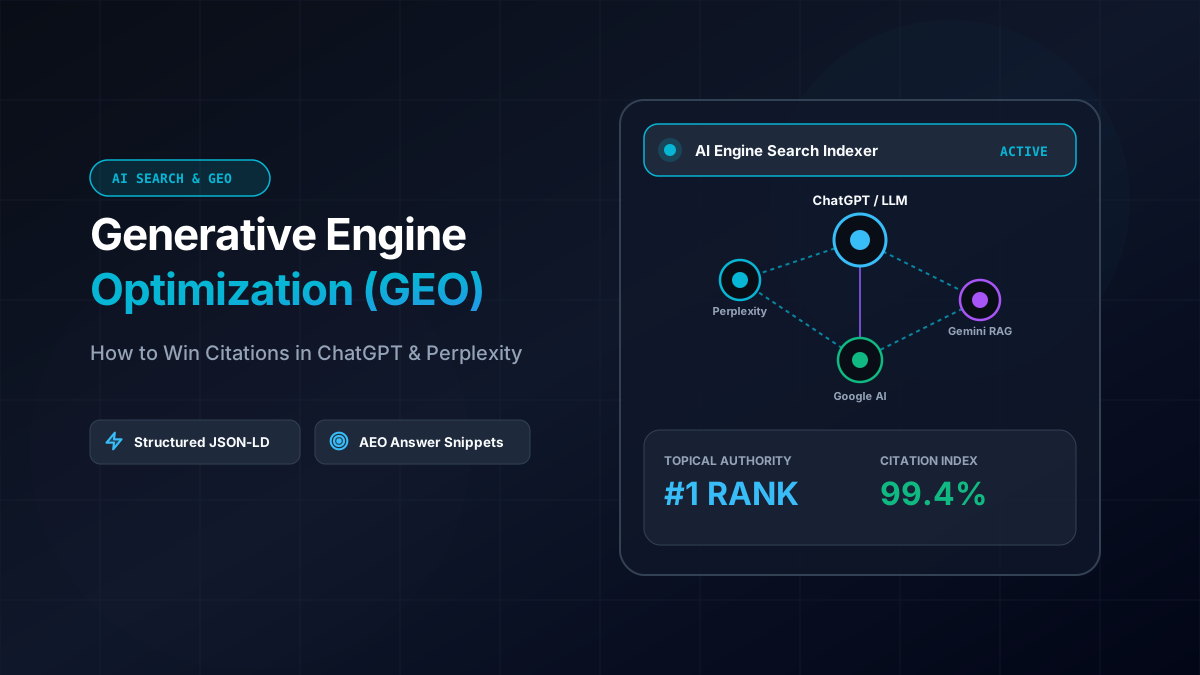
 Generative Engine Optimization (GEO & AEO)
Every day, thousands of founders, CTOs, and marketing leads search Google, Reddit, and X with high-intent queries like:
- "How do I get my business cited on ChatGPT and Perplexity?"
- "What is Generative Engine Optimization (GEO) vs traditional SEO?"
- "Why is my website traffic dropping after Google AI Overviews rolled out?"
- "How to structure JSON-LD schemas so AI answer engines recommend my software?"
If you are noticing changes in your organic search impressions or wondering how conversational AI tools choose which brands to recommend, you are experiencing the biggest paradigm shift in search history.
Why Traditional SEO Alone No Longer Works
Traditional search engine optimization (SEO) was designed for a 10-blue-links world. You wrote long-form keyword-stuffed articles, built backlinks, and waited for Google's crawler to rank your page.
However, modern buyers no longer scroll through pages of blue links. They ask conversational AI tools:
"What is the most reliable cross-platform mobile development agency that specializes in 60 FPS Flutter apps and transparent pricing?"
When a user asks this, Retrieval-Augmented Generation (RAG) systems do not just look at keywords. They parse entity knowledge graphs, verify author credentials across multiple verified domains (GitHub, LinkedIn, X), calculate semantic trust scores, and extract direct answers from high-speed pages with flawless Core Web Vitals.
If your website lacks dense structured data or takes more than 2.5 seconds to load, AI scrapers time out or skip your content in favor of competitors who provide clean, structured answers.
How Generative Engine Optimization (GEO & AEO) Actually Works
Behind the scenes, ranking on AI answer engines involves a 4-step engineering process:
1. Entity Disambiguation & Cross-Domain Validation
AI engines connect your business name to verified external profiles (e.g., Schema.org sameAs linking GitHub, LinkedIn, official documentation, and registered directories).
2. Multi-Layered Schema.org JSON-LD Graphs
Machine-readable Service, OfferCatalog, FAQPage, and Person schemas provide LLMs with unambiguous facts about your offerings, pricing, and capabilities without relying on guess work:
{
  "@context": "https://schema.org",
  "@type": "Service",
  "name": "SEO, AEO & GEO Tuning",
  "provider": {
    "@type": "Person",
    "name": "Usama Sarwar",
    "url": "https://usama.dev"
  },
  "serviceType": "Generative Engine Optimization & AI Search Citation Authority"
}
3. "Answer-First" (AEO) Content Structure
Structuring each page section so the exact answer to high-intent queries is delivered in the first 120 words with clear bullet points, quantitative metrics, or comparison tables.
4. Edge-Rendered Sub-Second Speed (Core Web Vitals)
LLM search crawlers have strict execution timeouts. Utilizing Next.js 15 App Router with server-side rendering ensures crawlers ingest the full DOM instantly.
4-Stage Inbound Implementation Process
Ready to Capture #1 Citations on Google, ChatGPT & Perplexity?
Don't let your competitors capture your high-intent search traffic on conversational AI engines.
Explore our dedicated SEO, AEO & GEO Tuning Service to:
- Test our interactive sprint cost estimator and scope calculator.
- Review our 4-stage delivery questline from technical schema audits to Google and LLM indexation pings.
- Schedule a free 15-minute discovery consultation to audit your current search and AI visibility.
You can also browse our full Engineering Services Directory to explore custom full-stack web and autonomous AI development packages.