

 Optimizing Next.js for Sub-Second Loads and Flawless Core Web Vitals
Frontend engineers, eCommerce brands, and web managers frequently search:
- "How to fix slow Largest Contentful Paint (LCP) in Next.js App Router?"
- "Why is my Next.js site failing Google Core Web Vitals on mobile devices?"
- "How to eliminate Interaction to Next Paint (INP) lag in complex React applications?"
- "How does React Server Components (RSC) impact SEO indexing and page load speed?"
With Google's search algorithms heavily weighting Core Web Vitals and user page experience, sub-second load times are no longer just an engineering aesthetic, they directly dictate conversion rates and search rankings.
Why Slow Web Vitals Destroy Search Visibility
Modern web search engines use real-world user telemetry (Chrome User Experience Report, CrUX) to rank web pages. If your site scores poorly on Core Web Vitals:
- Higher Bounce Rates: Every 1-second delay in page load time reduces visitor conversion rates by up to 20%.
- Deprioritized Search Crawling: Googlebot and AI search scrapers reduce crawl budgets on sites with high TTFB and excessive script execution times.
- Lost AI Citations: AI answer engines (ChatGPT, Perplexity) favor lightning-fast pages that return clean, server-rendered DOMs without client-side hydration delays.
How Next.js App Router & Edge Optimizations Work
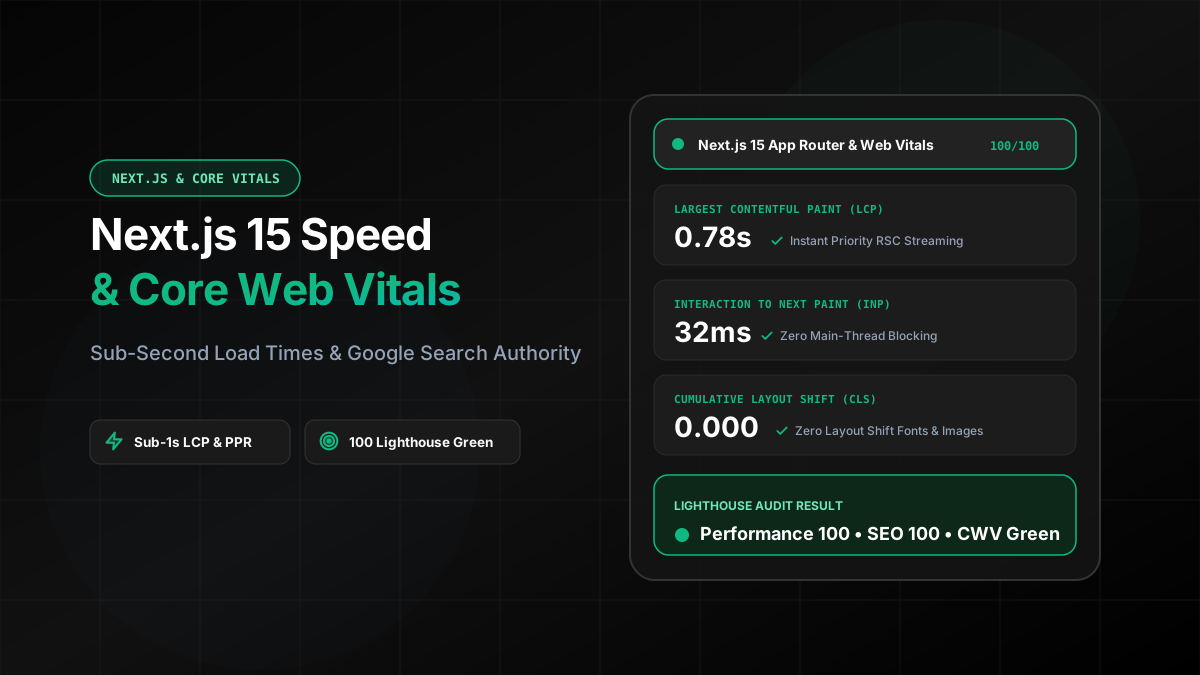
Reaching perfect 100 Lighthouse scores requires decoupling static content from dynamic client components:
1. Priority Asset Loading & AVIF/WebP Decoding
Using <Image priority sizes="..." /> signals the browser to fetch the LCP banner before non-critical scripts, cutting render delays by over 50%.
2. Eliminating Hydration Overhead with RSC
By keeping headers, footers, and static text content as pure React Server Components, client-side JavaScript bundle sizes are reduced dramatically.
3. Eliminating INP Bottlenecks
Heavy computations and analytical trackers are offloaded to Web Workers or scheduled microtasks (scheduler.yield()) to ensure buttons and inputs respond in under 50ms.
4-Step Web Vitals Optimization Sprint
Next.js Development & Search Optimization Services
Ready to transform your web application into a lightning-fast, high-converting digital platform?
- Full-Stack Web Development: Explore our Full-Stack & Mobile Development Service to build or refactor high-speed Next.js 15 web applications with clean architecture.
- Search & AI Optimization: Explore our SEO, AEO & GEO Tuning Service to achieve top Google rankings and AI citations across ChatGPT and Perplexity.
- Services Directory: Browse our complete Services Directory to calculate project costs and schedule a 15-minute consultation.